
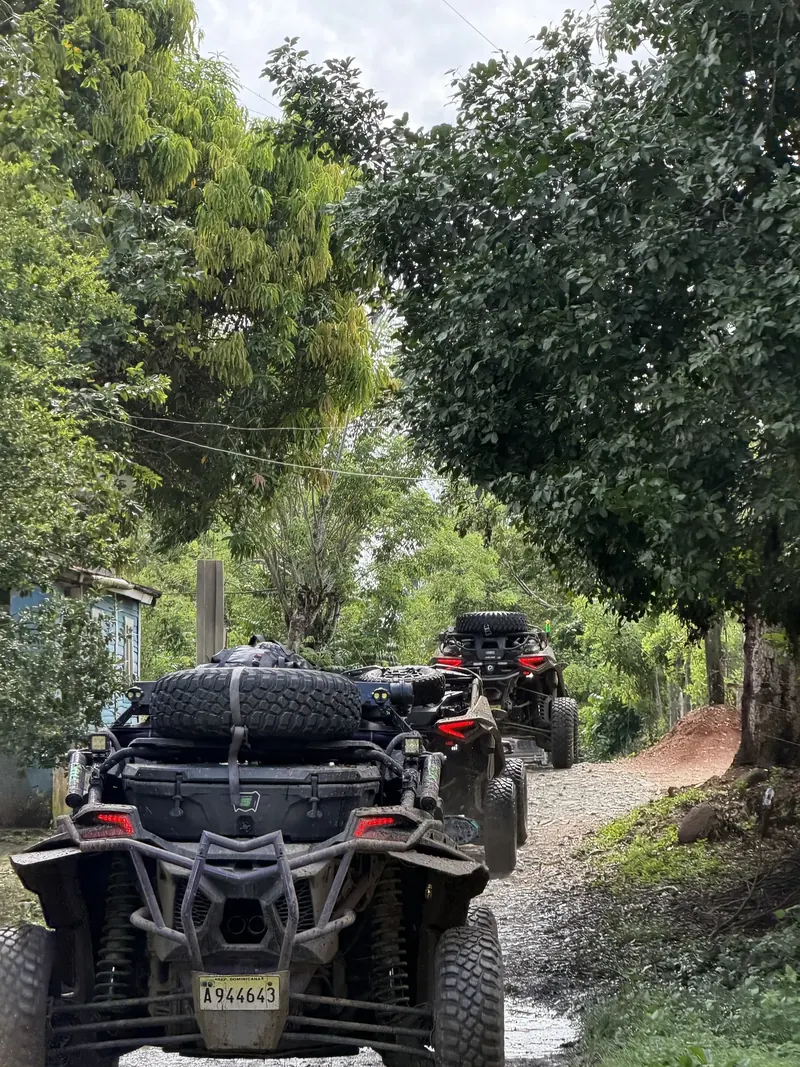
What is there to do in Las Terrenas and Samaná around a UTV tour?
The Samaná Peninsula easily fills a week of sightseeing on top of your tour: beaches, a forest waterfall, a national park reached by boat, an island in the bay and, in season, humpback whales. This guide is for companions who are not driving and for anyone adding a few days before or after their trip.
One important point: these outings are not part of our tour packages. They are run by local operators that you choose and book yourself. Our tours start from Camp Can-Am, Avenida Emilio Prud'Homme, in Las Terrenas.
| Activity | Where | Getting there | Best time |
|---|---|---|---|
| Beaches and water sports | Las Terrenas | On foot or by motorbike taxi from the center | Year-round, driest December to April |
| El Limón waterfall | About 15 km from Las Terrenas | Hike of about 2.5 km, on foot or on horseback | Year-round |
| Los Haitises National Park | Samaná Bay | 3 to 4 hour boat trip, certified guide required | Dry season |
| Humpback whales | Samaná Bay | Licensed boat trip from Samaná | Mid-January to late March |
| Cayo Levantado | Samaná Bay, 7 km from Samaná | Boat from Samaná pier | Year-round, best in the afternoon |
Which beach should you choose in Las Terrenas?
Las Terrenas has four main beaches, each with its own feel: Las Ballenas for calm swimming, Playa Bonita for surfing, Cosón for wide-open space and Punta Popy for a lively scene and kitesurfing.
- Playa Las Ballenas: calm water, popular with families. It is named after three rocky islets offshore that look like whales.
- Playa Bonita: laid-back, with surf in some spots.
- Playa Cosón: long and wild, where a river meets the ocean.
- Punta Popy: close to the center, busy, with areas for kitesurfing and water sports.
Paddleboarding and kayaking are popular at Las Ballenas and Punta Popy, and an easy walk links Punta Popy to Las Terrenas beach. For a full-day trip, Playa Rincón near Las Galeras is described by the official tourism board as a long, undeveloped white-sand beach, reached by car or boat from Las Galeras.
How do you visit El Limón waterfall?
El Limón waterfall is reached on foot or on horseback, along a trail of about 2.5 km from the El Limón area, roughly 15 km from Las Terrenas. The falls drop about 40 meters.
The site is a protected natural monument under the Dominican protected areas law (Law 202-04 of 2004), covering about 16 km². If you choose a horseback ride, pick an operator that treats its animals well, and wear closed-toe shoes for the walk.
What can you see in Los Haitises National Park?
Los Haitises is a national park created in 1976 on Samaná Bay, known for its limestone hills, mangroves and caves decorated with Taíno drawings. The name comes from the Taíno language and means "mountainous land".
- The mogotes are vegetation-covered limestone hills that can reach around fifty meters.
- The mangroves, crossed by channels, are among the largest in the Caribbean.
- Caves such as Cueva de la Arena and Cueva de la Línea hold Taíno pictographs and petroglyphs.
- More than a hundred bird species live here, including colonies of pelicans, frigatebirds and egrets.
Access is almost exclusively by boat, from Samaná, Sabana de la Mar or Sánchez. The trip usually lasts 3 to 4 hours, and a certified guide is mandatory.
When can you see humpback whales in Samaná?
Humpback whales gather in Samaná Bay every winter to mate and give birth: the 2026 whale-watching season officially ran from January 15 to March 31. The Dominican Ministry of Environment regulates the activity and issues permits to whale-watching boats.
Rules apply in Samaná Bay and in the Banco de la Plata and Banco de la Navidad Marine Mammal Sanctuary. Trips leave from Samaná harbor, and the town also has a whale museum. Choose an operator licensed for the current season, since exact dates are set every year.
Is Cayo Levantado worth a visit?
Yes, for a half day at the beach: Cayo Levantado is a small island in Samaná Bay, nicknamed "Bacardi Island", 7 km from Samaná. Only the western third of the island is open to the public, with a beautiful beach; a hotel occupies the rest.
You get there by boat from Samaná pier. Large cruise ships call there regularly, so Lonely Planet suggests going in the mid to late afternoon for a quieter visit.
What should you eat on the Samaná Peninsula?
The dish to try is pescado con coco, fish cooked in a coconut milk sauce and considered the region's signature dish. This coconut-based cooking is linked in particular to the heritage of formerly enslaved African Americans who settled on the peninsula in the 19th century.
In Las Terrenas, the Pueblo de los Pescadores, the old fishermen's village rebuilt after a fire, is lined with colorful seafront restaurants. It is the natural choice for dinner by the ocean after a day at the beach or on the trails.
How can you make the most of Las Terrenas itself?
Las Terrenas is a former fishing village turned holiday destination, whose growth was driven in part by Europeans. The center is easy to explore on foot and has a cosmopolitan feel, with bars, beach clubs and yoga by the sea.
For longer distances, motorbike taxis (motoconchos) are the usual local option; scooter and car rentals are also available. As anywhere, protect yourself from the sun, keep an eye on your belongings and stay careful on the road.
When is the best time for these outings?
The driest period runs from December to April, which is also the only time to see whales (mid-January to late March). The Atlantic hurricane season runs from early June to the end of November, so keep an eye on the forecast if you travel then.
| Months | What to know |
|---|---|
| December to April | Driest season, ideal for beaches and Los Haitises |
| Mid-January to late March | Humpback whale season in Samaná Bay |
| May to November | More frequent rain |
| June to November | Atlantic hurricane season |
How do you plan these days around your tour?
You can add nights in Las Terrenas before or after your tour, or continue your trip around the Dominican Republic. Extra lodging and transfers are only included if they appear in your quote or confirmed itinerary.
If your companion would rather ride with you than stay in Las Terrenas, the private buggy option makes that possible, and they do not pay a second full package. They can also join as a passenger with a professional driver, at the same price as a driver. Compare the options on the Pricing and options page, then check the upcoming departures.
Every package includes days off the trails: arrival, briefing, recovery and return transfer. The Grand Raid and the Expedition Raid also include a final day that is free or used for return logistics; the Discovery Raid lasts 7 days in total. Share your arrival and departure dates through the request form and the team will reply with availability and full trip details.
Sources
- Dominican Today, Dominican Republic launches 2026 humpback whale watching season in Samaná, Jan 16, 2026
- El Día, 2026 whale-watching season opens in Samaná (in Spanish), Jan 16, 2026
- Go Dominican Republic (Ministry of Tourism), Las Terrenas
- Go Dominican Republic (Ministry of Tourism), Samaná
- Go Dominican Republic (Ministry of Tourism), Playa Rincón
- Lonely Planet, Cayo Levantado
- Routard, Las Terrenas (in French), accessed Oct 18, 2026
- Routard, Los Haitises National Park (in French), accessed Oct 18, 2026
- elDinero, El Salto El Limón envía una señal (natural monument status, in Spanish), Aug 15, 2019
- Air Canada Vacations, Samaná (whales, pescado con coco)
- El Día, Lenten food traditions by region (pescado con coco, in Spanish)
- Diario Libre, Cocolo and Arab flavors in Dominican cuisine (in Spanish)
- Government of Canada, Travel advice: Dominican Republic (hurricane season), updated May 26, 2026